
'With Punjab and Kashmir in flames, it would not have been politically wise to alienate the West.' 'It would have inclined Western countries towards Pakistan.' 'It would have been a self-goal.'
Scientists are puzzled by what caused the mysterious nuclear leak at the Kakrapar Nuclear Power Plant in Gujarat last year, reveals Pallava Bagla.
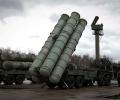
With cruise missile and air strikes being India's most likely response to a hypothetical Pakistani terrorist outrage in the future, retaliation from the Pakistan air force is inevitable. That is where the S-400 will come into play, says Ajai Shukla.

Were the May 1988 nuclear tests a success? 20 years after Pokharan, a look back at those decisive atomic tests through the eyes of someone who knew.

This Haryana village believes it has 'found' the Saraswati river of the Vedas.

'Well begun is half done, today there are more hits than misses by the Modi government in its support towards science in India,' says Pallava Bagla.
'When the cause of the leak is identified, is the AERB going to order a shutdown of all the other pressurised heavy water reactors in the country to fix the underlying problem?'
'His contributions in setting up transparent precedents of governance are still basically intact despite the cynicism of several of his successors,' notes Jamini Bhagwati.

Even as plans to redevelop Dharavi continue to gather dust in government files, its young residents have chalked their own course and chosen to fly high. Hepzi Anthony recounts a few inspiring tales.

With the launch of the first indigenous aircraft today, India will join a club of nations like the United States, Russia, China, the United Kingdom and France that possess nuclear-powered submarines

'If ever India loses its patience after repeated terror attacks and decides to retaliate against the terrorist camps, Pakistan may term that a conventional military attack and invoke the nuclear option. This is a way to continue with terrorism without retaliation.'

20 years ago this day, May 11, 1998, India conducted its second nuclear test at Pokharan in Rajasthan. In a fascinating interview on Rediff.com, K Subrahmanyam revealed how Indian PMs reacted to nuclear ambitions.

'I would like to request the AERB, UCIL and DAE to introspect. The world is changing, so is India. The wave of development and modernity will not stop for those who continue to live in the past. The future belongs to the youth who believe in the values of honesty, transparency and efficiency.'

Research and teaching have remained Professor Chintamani Nagesa Ramachandra Rao's first priority and first love, and that is what sets him apart, says Dinesh C Sharma

akistani-American David Coleman Headley outline how the Lashkar-e-Tayiba and the Inter-Services Intelligence wanted to spread terror in India.

Thyrocare founder Arokiaswamy Velumani shares his success story with Anjuli Bhargava as he remembers the one person who stood by him through it all.

Prime Minister Manmohan Singh on Friday batted for nuclear power as a "dependable and clean option", even as he underlined the need to ensure that all ingredients by which nuclear fuel is made remain safe and do not fall in the hands of terrorists and anti-social elements.

Science in India has developed a great deal since C V Raman, particularly after the country gained Independence but we are yet to win a Nobel prize in physics, chemistry or medicine. Is it a reflection on the quality of Indian science? Or it has to do with the politics of Nobel prizes, as is often believed, asks Dinesh C Sharma.

'Understand one thing, if you want immediately and magically that things should become cheap, it's not possible. It's a long-term policy.' 'Inflation is linked to the storage system and with the production system. Whenever production rises, prices go lower. So if we store when the prices are low and release them when prices rise, prices can be maintained.' 'The problem is that in our country fruits and vegetables worth Rs 110,000 crore go to waste as they rot. And grains worth Rs 85,000 crore rot. So the storage system is another big reason for inflation.' Union Transport Minister Nitin Gadkari in an exclusive interaction with Sheela Bhatt/Rediff.com

'ISRO facilities are very expensive and any damage caused by these start-ups can create havoc to our space programme.'

Mahesh Rangarajan, director of the historic Nehru Memorial Museum and Library in New Delhi, tells Sheela Bhatt how the first prime minister will always remain relevant, and the efforts being made to keep his legacy alive.
